



Research Area ___ Scalable Design Spaces

Testing Under Realistic Conditions in the
Container Laboratory

Novel planning and construction processes will need to be both sustainable and economically viable. People will have to negotiate the tension between technology, work, and regulatory requirements.

What Are Scalable Design Spaces?

Motivation

The goal of the Scalable Design Spaces is to present future topics in the construction industry in a way that makes them understandable, accessible, and tangible for different target groups – with a focus on people.

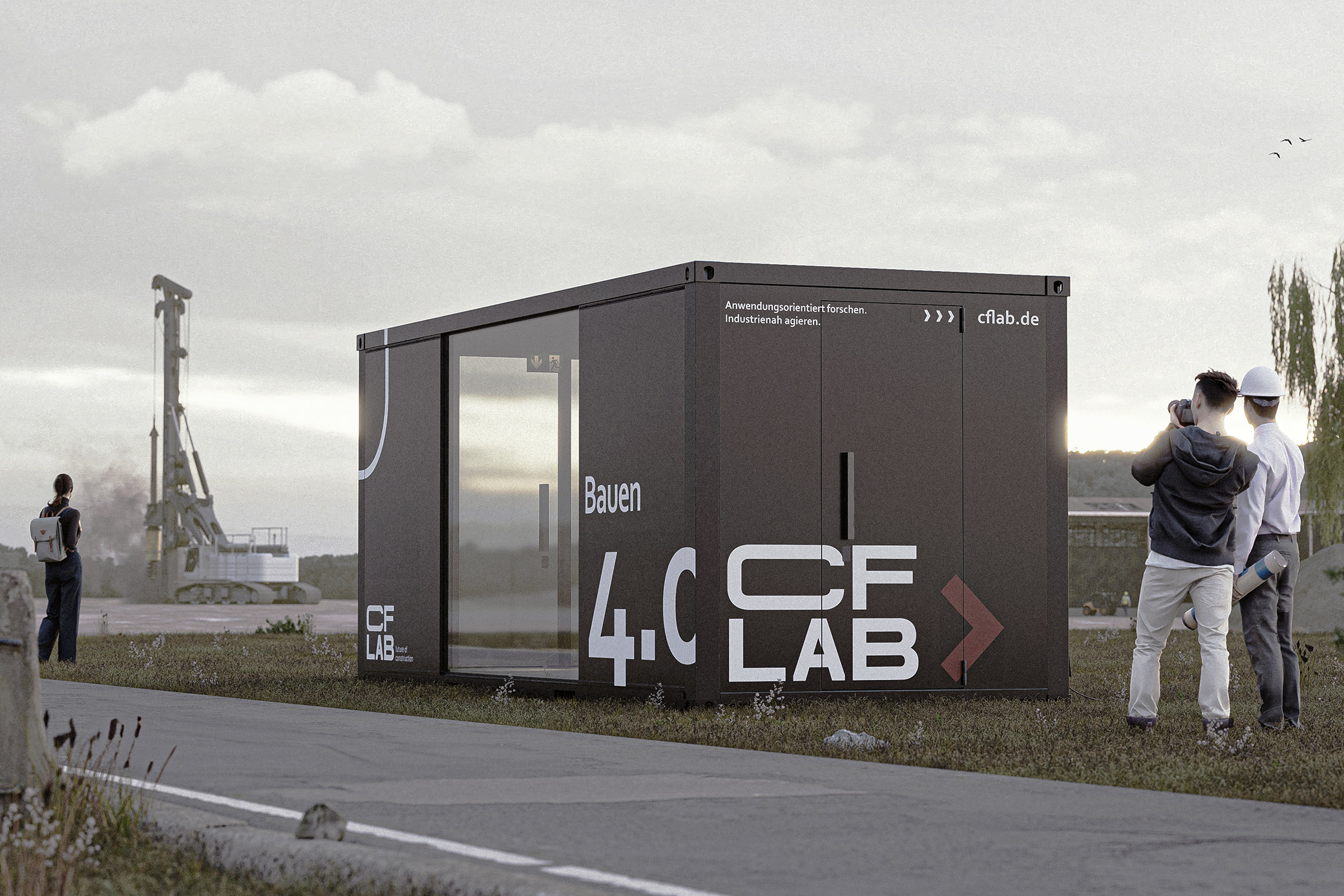
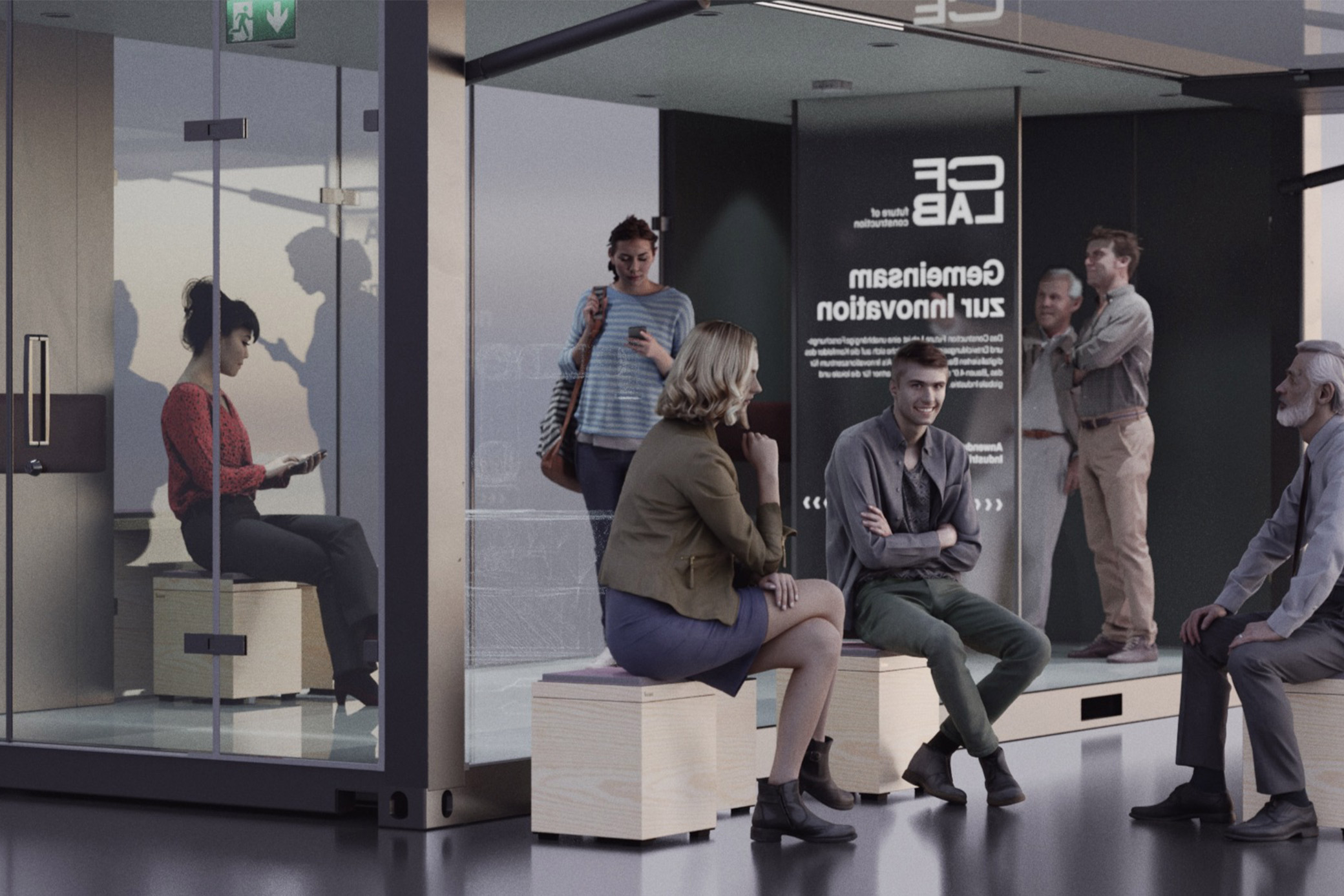
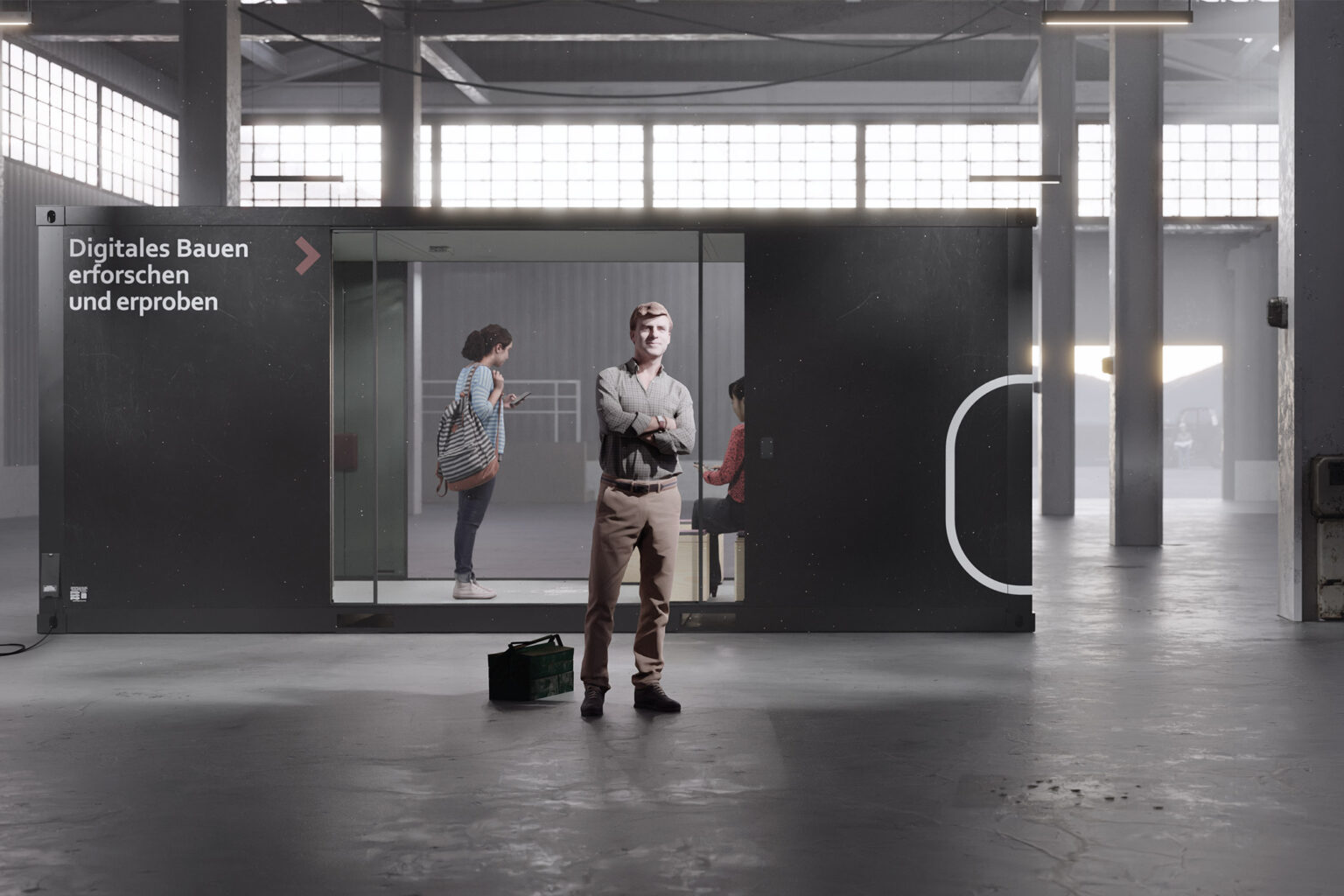
The centerpiece of the Scalable Design Spaces is the Transition Space: a modular, adaptable environment that brings together research, learning, and exchanges, combining analog, digital, and hybrid demonstrators into narrative experiences – a unique environment that creates playful spaces for serious change.

ScalableDesignSpaces_3zu2_02

r

ScalableDesignSpaces_3zu2_01
Renderings created by Vitus Pacholleck as part of a student project

Transition Space

Research and practice don’t always speak the same language – the Transition Space creates common ground that sparks curiosity and lowers barriers.

The goal is to foster genuine dialog rather than one-way communication: Knowledge flows in both directions, from CFLab to visitors and from visitors back into our development work. In this way, the Transition Space strengthens the focus of the Scalable Design Spaces on acceptance, participation, and human–machine interaction.

Onboarding

The Transition Space follows the logic of an onboarding process or a game tutorial: Anyone entering the space explores key questions about CFLab step-by-step – who we are, what we research, and what the construction industry of tomorrow might look like.

Content is conveyed through physical, digital, or hybrid demonstrators that invite visitors to get hands-on as they try out and operate the equipment.

r

Modularity and Scalability

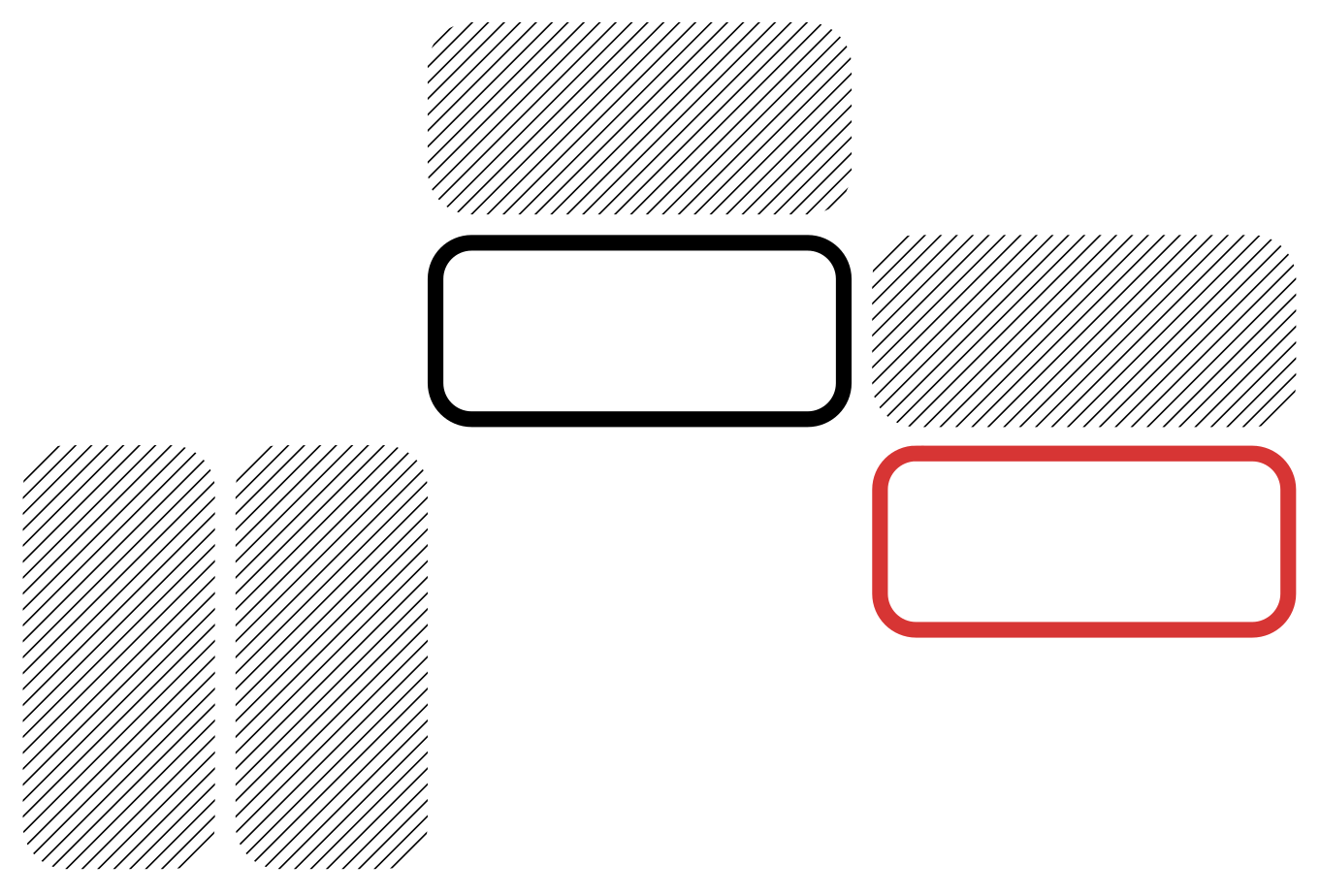
The Scalable Design Spaces consist of several individual containers, each designed as a room with identical dimensions and floor space.

Alongside the Transition Space, a remote operation workspace is being created as another space for interaction – combining conventional machine handling (teleoperation, safety, ergonomics) with formats for co-creation, prototyping, and joint experimentation.

The principle of identically sized containers is the basis for true scalability: Content, technologies, and set-ups can be exchanged, cloned, and expanded between units as needed. This keeps the system scalable, easy to maintain, and adaptable – from a single module to a networked ensemble.


Immerse yourself in the world of CFLab’s Scalable Design Spaces and discover how you can be instrumental in shaping the future of the construction industry.

Your Contact

Felix_web

Dipl.-Ing. Felix Schmitt

CFLab_Logo_ohne_Claim_RGB

Live insight into the construction progress

Follow in real time how the CFLab in Görlitz – our test area and testing ecosystem – is taking shape on an area of 80,000m2. The live camera offers you a direct view of the construction site and shows the progress of our project. Completion is planned for 2026.